
You and your partner might spend hours in the same room, but how much of that time is spent truly connecting? In our busy lives, it's easy for couples to fall into a routine of coexisting rather than connecting. You share space and meals, but the emotional gap can feel wider each day. The real challenge isn't just finding more time, but making that time count.
But what if you could turn simple moments into powerful opportunities for intimacy?
This article solves that exact problem. We are moving beyond generic date nights to give you a curated list of powerful bonding activities for couples, each designed to foster deep, meaningful connection. They are tools to help you understand each other on a profound level. We’ll even show you how to tailor these experiences to how you and your partner uniquely give and receive love.
Imagine knowing exactly what to do to make your partner feel seen, cherished, and deeply understood. The secret isn't grand gestures; it's intentional connection, and unlocking it starts with understanding your unique emotional blueprint. Have you ever considered what knowing your love language could change?
A great place to start is by discovering your profile at https://www.thelovelanguagetest.com/. But once you have that knowledge, the real magic is in what you do next.
1. Love Language-Based Date Nights
Generic date nights can often feel like checking a box, not a genuine opportunity for connection. Tailoring your dates to your partner’s primary love language transforms a simple evening into a powerful bonding activity for couples. This approach moves beyond guessing what your partner might enjoy. It focuses directly on what makes them feel most seen, valued, and loved.
The first step is understanding how each of you uniquely experiences love.
By taking The Love Language Test together, you gain a clear roadmap to each other’s emotional needs. This isn't just theory; it's about turning that knowledge into deliberate, heartfelt action. The results become your guide for planning dates that resonate deeply.
But what does this look like in practice?

How to Implement Love Language Dates
Once you've discussed your results, the planning can begin. The key is to design an experience that speaks directly to a specific love language. This focused effort shows you’ve been listening and are committed to loving them in their own "language." And this is where the real connection happens.
Here are some practical examples:
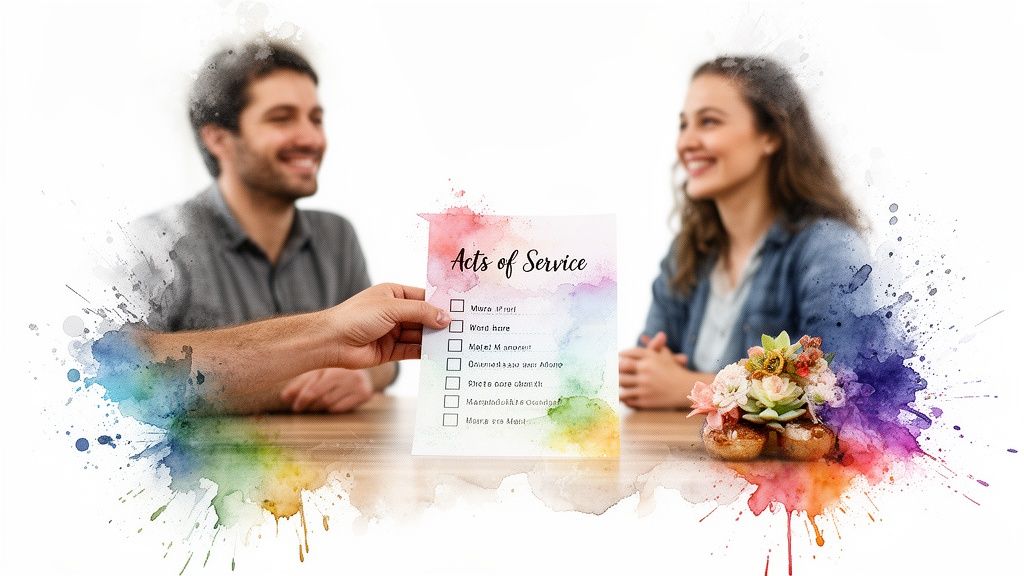
- Acts of Service: Surprise your partner by tackling that one nagging household project they've been dreading, like organizing the garage. Afterward, celebrate the accomplishment together.
- Quality Time: Plan a weekend hike on a scenic trail where cell service is limited. The goal is uninterrupted, focused time together, free from digital distractions.
- Words of Affirmation: Create a "memory jar" date. Write down favorite memories and qualities you admire in each other, then take turns reading them aloud.
- Receiving Gifts: Plan a scavenger hunt that ends with a small, thoughtful gift. The experience of the hunt builds anticipation and makes the gift even more meaningful.
- Physical Touch: Sign up for a beginner’s partner dance class, like salsa or tango. This creates a fun, structured environment for physical closeness and teamwork.
To get started, you can find a wealth of ideas that won't break the bank. Explore these cheap or free date ideas tailored to each love language.
2. Communication Workshops Using Love Language Insights
Effective communication is the bedrock of a strong partnership. Yet, many couples find themselves stuck in repetitive, unproductive conflict cycles. Attending a communication workshop that uses Love Language insights offers a structured path to breaking these patterns. This approach elevates communication from a guessing game to a strategic skill, providing a shared framework to understand each other’s core needs.
Instead of just talking more, you learn to talk better.
These workshops use your specific Love Language profiles as a diagnostic tool. They help you pinpoint exactly why certain conflicts arise. A partner whose primary language is Acts of Service may show love by doing chores, while their Words of Affirmation partner feels unloved without praise. A workshop unpacks this mismatch, turning frustration into profound understanding.
So how do you bring this concept into your own relationship?

How to Implement Communication Workshops
The first step is finding a workshop or professional who incorporates this framework. Many pre-marital counseling programs and couple’s therapists specialize in this area. Sharing your test results beforehand can help the facilitator tailor the experience to your unique dynamic, but the real work starts when you apply the lessons.
Here are some practical examples of what to expect:
- Conflict Resolution Role-Play: A therapist might guide you through a common argument, this time reframing your points through the lens of your partner’s love language.
- Personalized Communication Plans: A coach could help you create a weekly plan with specific actions, like scheduling uninterrupted "Quality Time" each week.
- Active Listening Exercises: You'll practice hearing the underlying emotional need behind your partner’s words, rather than just reacting to the surface-level statement.
- Expressing Needs Effectively: Learn to phrase requests in a way that aligns with your partner’s love language, making them more likely to be met with enthusiasm.
This type of workshop is one of the most powerful bonding activities for couples because it provides tools you will use for a lifetime. To better understand the core concepts used, you can learn more about what the 5 love languages are.
3. Love Language Appreciation Challenges
Knowing your primary love language is crucial, but true connection deepens when you become fluent in all five. Love Language Appreciation Challenges are structured activities designed to help you deliberately practice giving and receiving love in ways that might not come naturally. This intentional effort stretches your relational muscles, making both of you more versatile and responsive partners.
The goal isn't to change your primary language. It’s about expanding your shared vocabulary of affection.
By dedicating a week or a month to exploring each language, you build empathy and discover new ways to make each other feel cherished. It transforms love from a passive feeling into an active, daily practice.
But how do you start a challenge without it feeling like a chore?

How to Implement a Love Language Challenge
The key is structure and a spirit of playful discovery. Start by using your results from The Love Language Test to see which languages are your weakest. This gives you a clear starting point for areas that need the most practice, turning a weakness into a strength.
Here are some practical challenge ideas:
- The 7-Day Quick Start: Assign one love language to each day of the week. On Monday (Words of Affirmation), leave encouraging notes for each other. On Tuesday (Acts of Service), one partner makes dinner.
- The 30-Day Deep Dive: Dedicate the entire month to focusing on one or two languages you both want to improve. A "Physical Touch" month could involve daily hugs and scheduled cuddle time.
- Weekly Partner-Led Rotation: Each week, one partner is in charge of demonstrating a specific love language. This gives each person ownership and encourages creative thinking.
- Themed Monthly Challenges: Align the challenge with the season. A "Winter Cuddle Month" focuses on Physical Touch, while a "Spring Spruce-Up" can be all about Acts of Service.
To make the challenge feel engaging, keep a visible tracker on a calendar or whiteboard. This creates accountability and turns your shared progress into a visual celebration of your efforts.
4. Shared Journal or Love Letter Exchange
In our fast-paced world, deep, thoughtful communication can get lost in the shuffle of daily texts and quick conversations. Implementing a shared journal or a love letter exchange carves out a dedicated space for vulnerability and affection. This practice is one of the most powerful bonding activities for couples because it creates a tangible record of your love story.
It allows you to articulate feelings that might go unsaid in the moment.
This approach is especially impactful for partners whose primary love language is Words of Affirmation. For them, written words of love and appreciation are not just nice gestures; they are a profound source of emotional nourishment. A love letter becomes a treasure they can revisit.
But how can you turn this idea into a consistent habit?
How to Implement a Shared Journal or Letter Exchange
The key to success is consistency and intentionality. The goal isn't just to write; it's to communicate love in a way that truly lands with your partner. This means understanding their emotional needs, which you can pinpoint by taking The Love Language Test. From there, the process becomes much clearer.
Here are some practical ways to get started:
- Weekly Journal Entries: Dedicate a notebook where each partner writes an entry once a week. Use prompts like, "This week, I felt most loved when you…"
- Monthly Love Letters: Commit to writing and exchanging a heartfelt letter on a specific day each month, such as the anniversary of your first date. This turns it into a special ritual.
- Digital Shared Note: Use a shared notes app to leave messages for each other throughout the week. This can be a mix of appreciation, encouragement, and simple notes.
- Post-Conflict Connection: Make it a practice to write a letter after a disagreement to express your perspective calmly and reaffirm your commitment, focusing on feelings rather than blame.
To make this practice truly transformative, focus on specifics. Instead of just saying "I love you," explain why. Describe how their specific actions made you feel. Reading these entries aloud to each other can amplify their emotional impact, creating a powerful moment of connection.
5. Couples Retreat or Weekend Getaway Planning
Daily life, with its endless cycle of work and chores, can slowly chip away at a couple's connection. Planning a couples retreat or weekend getaway is one of the most effective bonding activities for couples because it intentionally removes you from that routine. This dedicated time allows you to focus exclusively on each other, creating a unique space for intimacy and rediscovery.
It’s a chance to see each other not as co-managers of a household, but as partners on an adventure.
The goal is to design an experience that feels like a shared reset button. By stepping away from familiar surroundings, you break old patterns and create opportunities for new memories.
But how do you ensure this time away truly deepens your bond?
How to Implement a Couples Getaway
A successful retreat goes beyond just booking a hotel; it involves thoughtful planning centered on connection. Use your love language profiles as a blueprint to structure activities that will resonate with both of you, ensuring each partner feels seen and cherished. This way, the getaway speaks directly to what they need.
Here are some practical examples:
- For Quality Time & Physical Touch: Rent a secluded mountain cabin. Plan long hikes, cook meals together, and spend evenings by the fire with a "no devices" rule.
- For Acts of Service & Receiving Gifts: Plan a surprise spa weekend. One partner can handle all the logistics (an act of service), while the experience itself serves as a meaningful gift.
- For Words of Affirmation & Quality Time: A beach getaway can be perfect. Dedicate specific times, like a sunset walk, to share what you appreciate about each other or to discuss future dreams.
- For Adventure & Teamwork: Book an adventure trip involving activities like kayaking or rock climbing. Facing a challenge together builds trust and creates a powerful sense of partnership.
To get started, the first step is to discuss what a "recharge" looks like for both of you. You can find out what truly makes your partner feel loved and appreciated by taking The Love Language Test together.
6. Acts of Service Challenge and Appreciation
For couples where one or both partners speak the love language of Acts of Service, actions truly speak louder than words. An "Acts of Service Challenge" is a bonding activity where partners deliberately perform meaningful tasks to lighten each other’s load. This goes beyond routine chores; it’s about anticipating needs and joyfully offering support, which communicates deep care and respect.
This approach transforms daily responsibilities into opportunities for profound connection.
The goal is to serve with a spirit of generosity, not obligation, showing your partner that their peace and well-being are your priority. By taking on tasks they dread or find overwhelming, you are tangibly demonstrating your love.
But how do you start a challenge like this without it feeling like another to-do list?
How to Implement an Acts of Service Challenge
The first step is communication. Instead of guessing what would be helpful, ask your partner directly what tasks would most relieve their stress. This ensures your efforts are genuinely impactful. The key is to see these actions through from start to finish without needing reminders or praise. This is where true service begins.
Here are some practical examples:
- The Project Conqueror: Take complete ownership of a household project your partner has been putting off, like assembling new furniture or organizing the basement.
- The Weekly Planner: Volunteer to handle all meal planning, grocery shopping, and cooking for an entire week, freeing up significant mental energy for your partner.
- The Life Admin: Take over all administrative tasks for a month, such as paying bills, scheduling appointments, and managing the family calendar.
- The Freedom Giver: Arrange and manage all childcare for an afternoon, giving your partner a block of uninterrupted free time to use however they wish.
- The Deep Clean: Surprise your partner by deep-cleaning and organizing a space that has been a source of stress for them, like the home office or the garage.
7. Physical Touch and Intimacy Rituals
For partners whose primary love language is Physical Touch, connection is often felt most profoundly through physical closeness. Building intentional rituals around touch transforms everyday interactions into powerful bonding activities for couples. This approach goes beyond grand romantic gestures, focusing instead on consistent, meaningful physical affection that builds a foundation of security and intimacy.
It's about recognizing that physical touch is a language in itself.
This language communicates love, safety, and belonging without a single word. By consciously creating daily or weekly rituals, you ensure this crucial need is met, reinforcing your bond. This isn't just about sex; it’s about the full spectrum of physical affection that keeps you connected.
So, what does this look like in daily practice?
How to Implement Physical Touch Rituals
Once you understand the importance of consistent touch, you can integrate small, deliberate actions into your routine. The key is to make these practices a natural and expected part of your day, showing your partner they are a constant priority. This focused effort makes them feel seen and cherished in a way words can't.
Here are some practical examples:
- Morning Cuddle Ritual: Before getting out of bed, dedicate five minutes to simply holding each other. This starts the day with a feeling of connection and security.
- Greeting and Goodbye Kisses: Make a point to share a meaningful kiss every time you leave or return home. This small act reinforces your bond during transitions.
- Hand-Holding Walks: Whether you’re walking the dog or running errands, make it a habit to hold hands. This simple gesture maintains a physical link while you move through your day.
- Massage Exchange: Set aside one evening a week for a 15-minute massage exchange. This is a dedicated time for non-sexual, focused touch that relieves stress.
- Close Proximity: When watching TV or reading, intentionally sit close enough to be in physical contact, such as resting a hand on their leg or leaning against their shoulder.
To get started, simply discuss which of these rituals feels most natural for both of you. You can find out more about your specific needs by taking the love language test and discovering what truly makes you feel connected.
8. Gift-Giving with Intentional Meaning
For many, gift-giving can feel like a transactional obligation, especially around holidays or birthdays. But when approached with intention, it transforms into one of the most powerful bonding activities for couples. This is particularly true if your partner's primary love language is Receiving Gifts, where the thought and effort behind the present matter far more than its monetary value.
This practice moves beyond simply buying something your partner wants.
It involves giving a gift that tells a story about your relationship and reflects a deep understanding of who they are. It’s an opportunity to show you’ve been paying attention to their passions, inside jokes, and unspoken desires. This intentionality turns a physical object into a tangible expression of love, and that's a gift in itself.
How to Implement Intentional Gifting
The core of this activity is to pair the gift with a clear explanation of its significance. The "why" is just as important as the "what." This ensures your partner understands the depth of thought that went into your choice, making them feel truly seen and cherished. This is how you transform a simple present into a powerful statement.
Here are some practical examples:
- Symbolic Gestures: Find a small, symbolic item related to an inside joke or a significant relationship milestone. Present it with a handwritten note explaining its importance.
- Experience-Based Gifts: Instead of an object, gift an experience you can share, like a cooking class. Explain that the real gift is the quality time you’ll spend together.
- The Curated Collection: Throughout the year, secretly collect small items that remind you of your partner. On your anniversary, present the collection and tell the story behind each piece.
- Handmade Treasures: Create a personalized photo album or a curated playlist of your "relationship soundtrack." The effort itself is the ultimate gift.
- A Thoughtful Surprise: Leave a small gift with a heartfelt note on their pillow or in their car. This simple, unexpected gesture shows you are thinking of them.
9. Quality Time Conversation Rituals and Tech-Free Time
In a world filled with constant digital noise, undivided attention has become one of the most valuable gifts you can give your partner. Establishing tech-free conversation rituals is a powerful bonding activity for couples, especially for those whose primary love language is Quality Time. This practice is about intentionally carving out protected space to connect without the interruption of phones, televisions, or laptops.
The goal is to move beyond surface-level chatter about daily tasks.
It’s about creating consistent opportunities for genuine sharing, active listening, and emotional presence. By scheduling and honoring this time, you send a clear message: “You are my priority.” This dedicated connection is not just about having a conversation; it’s about nurturing the very foundation of your relationship.
But how do you build this habit effectively?
How to Implement Conversation Rituals
The key to success is consistency and intentionality. Start small and build rituals that fit naturally into your life. The structure ensures the time is prioritized, while the tech-free rule ensures the quality of that time is high. This approach demonstrates a commitment to being fully present with one another, which is exactly what a Quality Time person needs.
Here are some practical examples:
- Daily Check-In: Set aside 15 minutes before bed to talk. Put phones on chargers in another room and discuss the highs and lows of your day. This is for sharing, not problem-solving.
- Tech-Free Mornings: Dedicate Saturday or Sunday mornings to coffee and conversation. Leave devices off until after you’ve spent at least 30 minutes connecting.
- Walking Dates: Go for a walk together without your phones. The side-by-side nature of walking can make deeper conversations feel more natural than face-to-face talks.
- Weekly Deep Dive: Schedule one evening a week for a more in-depth conversation. Use prompts or ask bigger questions like, "What's something you're excited about right now?"
To make these moments even more impactful, focus on active listening. Ask follow-up questions, make eye contact, and share your own vulnerabilities. This isn't just about spending time together; it’s about creating a safe space for true emotional intimacy.
10. Couples Counseling or Therapy with Love Language Framework
Seeking professional guidance isn't a sign of failure; it’s a proactive step toward building a stronger, more resilient relationship. When couples counseling incorporates the love language framework, it becomes one of the most powerful bonding activities for couples available. This approach moves beyond generic advice, using your unique love profiles as a diagnostic tool to pinpoint and resolve deep-seated issues.
It's about bringing your love language results into a guided, therapeutic setting.
A skilled therapist can help you both understand how your different languages may be causing unintentional hurt or misunderstanding. They provide a safe space to explore these dynamics and build practical strategies for loving each other more effectively.
What does this look like when put into practice?
How to Implement Love Language Therapy
A therapist experienced with this framework can translate your test results into a concrete action plan for connection. They act as a guide, helping you navigate difficult conversations and build new habits that honor both of your emotional needs. This creates a shared project: learning to speak each other’s language fluently.
Here are some practical examples:
- Pre-Marital Counseling: A therapist helps an engaged couple use their love language profiles to establish a strong communication foundation before marriage.
- Addressing Communication Breakdowns: A couple feeling disconnected learns that one partner's need for Quality Time is clashing with the other's expression through Acts of Service.
- Rebuilding Trust: After a betrayal, a counselor uses the framework to help a couple rebuild safety, making efforts to repair feel more sincere and targeted.
- Navigating Life Transitions: Couples facing changes like a new baby or an empty nest use therapy to recalibrate how they show love and support in their new reality.
To get started, find a therapist who is experienced with or open to incorporating the love languages. Come to your first session prepared with your results. For a deeper understanding of how to meet specific needs, you can learn more about the Quality Time love language.
10-Point Comparison of Couples Bonding Activities
| Activity | Complexity 🔄 | Resources & Time ⚡ | Expected Outcomes ⭐📊 | Ideal Use Cases 📊 | Key Advantages & Tips 💡 |
|---|---|---|---|---|---|
| Love Language-Based Date Nights | Low–Moderate — repeatable planning 🔄 | Low cost, weekly/monthly time ⚡ | Builds intimacy & clearer expression of love ⭐⭐⭐ | Couples wanting regular, personalized connection | Use test results as guide; rotate languages; schedule monthly 💡 |
| Communication Workshops Using Love Language Insights | Moderate–High — structured facilitation 🔄 | Professional fee, multi-session time commitment ⚡ | Improved communication skills; reduced miscommunication ⭐⭐⭐⭐ | Couples with recurring conflicts or therapists using tools | Share results with facilitator; practice between sessions; follow-up recommended 💡 |
| Love Language Appreciation Challenges | Moderate — daily/weekly structure & tracking 🔄 | Low cost, sustained daily/weekly engagement ⚡ | Habit formation; greater versatility in giving/receiving love ⭐⭐⭐ | Couples who enjoy gamified, time-bound activities | Start with 7-day trial; use trackers and themed weeks for variety 💡 |
| Shared Journal or Love Letter Exchange | Low — asynchronous, low process overhead 🔄 | Minimal cost (paper/app), regular writing time ⚡ | Increased thoughtful expression; keepsake record ⭐⭐⭐ | Words of Affirmation lovers; long-distance or reflective couples | Set schedule, use prompts, save letters for anniversaries 💡 |
| Couples Retreat or Weekend Getaway Planning | High — logistical & emotional planning 🔄 | High cost and multi-day time investment ⚡ | Deep reconnection; fresh perspective; memory-building ⭐⭐⭐⭐ | Couples needing reconnection, milestones, or immersive work | Plan activities around love languages; set device rules; mix structure/free time 💡 |
| Acts of Service Challenge and Appreciation | Low–Moderate — task-focused execution 🔄 | Low monetary cost, requires consistent effort/time ⚡ | Immediate stress reduction; visible support; increased respect ⭐⭐⭐ | Households with unequal labor or Acts of Service primaries | Ask what helps most; serve without expectation; communicate boundaries 💡 |
| Physical Touch and Intimacy Rituals | Low–Moderate — routine establishment & sensitivity 🔄 | Minimal resources, daily/weekly time consistency ⚡ | Rapid emotional regulation; stronger attachment and safety ⭐⭐⭐⭐ | Physical Touch primaries; couples wanting more closeness | Start with non-threatening touch; discuss preferences and boundaries 💡 |
| Gift-Giving with Intentional Meaning | Low — planning & thoughtfulness required 🔄 | Variable cost (can be low), occasional time to prepare ⚡ | Tangible reminders of care; high meaning for recipients ⭐⭐⭐ | Receiving Gifts primaries; celebrations and milestones | Prioritize meaning over price; include a heartfelt note; be consistent 💡 |
| Quality Time Conversation Rituals and Tech-Free Time | Moderate — scheduling and discipline 🔄 | Time commitment (daily/weekly), minimal monetary cost ⚡ | Stronger communication, reduced drift, measurable satisfaction ⭐⭐⭐⭐ | Busy couples; Quality Time primaries; ongoing relationship maintenance | Schedule in advance; remove devices; use prompts and active listening 💡 |
| Couples Counseling or Therapy with Love Language Framework | High — professional process and clinical skill 🔄 | Higher cost, multi-session time, therapist availability ⚡ | Deep change; resolves root causes; guided repair of issues ⭐⭐⭐⭐ | Couples in crisis or seeking structured professional help | Complete test before sessions; choose therapist experienced with love languages; commit to homework 💡 |
Your Next Step to a Deeper Connection
Navigating the journey from simply sharing a life to truly sharing a soul is a beautiful, intentional process. We've explored how to transform simple moments into powerful points of connection by filtering them through the lens of your unique love languages. From "Quality Time" rituals to "Acts of Service" challenges, you now have a blueprint for building a stronger bond.
The common thread weaving through every suggestion is understanding. This isn't about adding more tasks to your busy schedule. It's about shifting your perspective from doing to being. A strong relationship isn't built on grand, occasional gestures. It’s forged in the quiet, consistent moments where you choose to see, hear, and love your partner in the way they best receive it.
- Intentionality Over Intensity: A small, thoughtful act that speaks your partner’s love language is more impactful than a grand gesture that misses the mark.
- Knowledge is Your Superpower: Knowing your partner’s love language is the key to making them feel truly cherished.
- Consistency Creates Security: Repeating these small, targeted acts of love builds a deep-seated sense of security and trust.
Reading about these bonding activities for couples is an excellent first step, but transformation happens through action. The most powerful starting point is to uncover the foundational language of your relationship. You don't need to guess. You can start with precision and clarity. Are you ready to unlock that clarity?
The most effective way to begin is by understanding your foundation. Discovering your and your partner's love languages transforms every activity we've discussed from a nice gesture into a profound expression of love. Take the free, 3-minute quiz from The Love Language Test to get the personalized insight you need to start building a deeper connection today.