
Emotional cheating is one of those things that’s tough to pin down. There’s no single, clear-cut action you can point to. It’s a breach of trust where a deep, intimate bond that should belong to your relationship gets shared with someone else.
It's not about physical contact. It's about secrecy, vulnerability, and emotional intimacy being rerouted outside the partnership. This leaves a significant other feeling completely replaced and devalued. But what does this slow drift actually look like in real life?
Understanding the Heart of Emotional Cheating

Think of your relationship's emotional energy like a river. In a healthy partnership, that river flows between you and your partner, nourishing your connection. But an emotional affair acts like a dam, diverting that vital flow toward someone else. Your primary relationship is left feeling dry and neglected.
This isn’t about having close friends; we all need those. It’s about a secretive connection that starts taking precedence over your partner. The real betrayal lies in sharing the parts of yourself—your fears, dreams, and quiet daily thoughts—that you once reserved exclusively for them.
This is precisely why, for many, an emotional affair can feel even more painful than a physical one. And the reason for that intense pain is worth understanding.
Why It Hurts So Much
The damage isn't from a single mistake but from a consistent pattern of emotional abandonment. This kind of betrayal can be particularly devastating, especially for women.
Studies show a staggering 83% of women report greater distress over emotional affairs compared to just 17% who find sexual infidelity more upsetting. You can dive deeper into the research on these relationship dynamics. The wound cuts deep because your role as the primary confidant has been given away.
When your partner turns to someone else for the support that should be yours, it chips away at the very foundation of your bond. It creates a profound sense of loneliness, even when you're in the same room.
An emotional affair makes you a stranger in your own relationship. The person who knows you best is suddenly sharing their inner world with someone else, and you're left on the outside looking in.
The secrecy is a massive part of it. Hiding conversations, deleting messages, or downplaying the connection are tell-tale signs that a line has been crossed. These behaviors are often the first red flags you'll notice.
10 Signs of an Emotional Affair You Cannot Ignore
It usually starts with a quiet, unsettling feeling that something in your relationship has changed. It's easy to second-guess yourself, but certain behaviors are consistent red flags. Recognizing these signs is the first, crucial step toward understanding what’s really going on.
If you’re wondering what emotional cheating looks like day-to-day, these changes in behavior can cut through the confusion.
They Guard Their Phone or Computer
This is one of the biggest and most common tells. Suddenly, their phone or computer is locked down. The partner who used to leave their phone on the kitchen counter now keeps it face down or takes it everywhere—even into the bathroom.
This kind of secrecy isn't just about privacy; it's about hiding conversations they know are inappropriate. It creates a wall where there used to be an open door. And it forces you to wonder what they’re so desperately trying to protect.
Increased Communication With One Person
A new "friend" seems to dominate their text messages, social media, and free time. You might hear their name constantly, or just notice your partner smiling at their phone far more often.
This isn't how most platonic friendships work. It’s a sign that this person is taking up a huge amount of emotional real estate in your partner’s head. This constant contact is a symptom of something deeper.
They Share Intimate Details With Them First
Did your partner get a big promotion at work? Have a terrible day? In a healthy partnership, you're the first person they'd tell.
When an emotional affair is happening, they share that news with the other person first. You find out later, as an afterthought. This can make you feel like a secondary character in your own relationship.
This shift is at the very heart of emotional cheating. It’s not just about hiding things; it’s about redirecting the flow of intimacy, support, and vulnerability that should belong to your partnership.
Emotional Withdrawal From You
As their emotional bond with someone else gets stronger, their connection with you often fades. Conversations become shallow. They seem distant or checked out, and the warmth you once shared is gone. They might be physically present, but it feels like their heart is somewhere else entirely.
Comparing You Unfavorably to Them
This one really hurts. You start hearing little comments like, "You know, Sarah thinks that joke is hilarious," or "Mark actually gets how stressful my job is." These comparisons, whether subtle or direct, are incredibly damaging.
They create a dynamic where you're constantly told you don't quite measure up to this other person. It’s a powerful way to erode your confidence and the foundation of your relationship.
Emotional affairs are surprisingly common. One study found that 91.6% of women globally admit to emotional cheating, compared to 78.6% of men. These connections often start in online spaces. You can read more about these infidelity statistics to see just how prevalent it is.
Now that we’ve identified the signs, let's explore why this kind of betrayal cuts so deep.
Why Emotional Infidelity Hurts So Deeply
Discovering an emotional affair isn't just about finding a few sneaky text messages. It’s a gut punch. The pain is overwhelming because this betrayal strikes at the very heart of your relationship—the trust, exclusivity, and feeling of being your partner's number one.
The wound runs deep because it’s a redirection of the heart.
This infidelity creates a profound and unsettling loneliness. You can be sitting right next to your partner, yet feel a million miles away because you know their emotional energy is somewhere else entirely. The deception makes you question your own reality, leaving you feeling replaced.
The Breakdown of Emotional Exclusivity
Every committed relationship is built on an unspoken promise of emotional exclusivity. It’s the quiet understanding that you are each other's main confidant, biggest supporter, and safest harbor in a storm.
When your partner gives that sacred role to someone else, they're breaking that core promise. It’s no longer just a "friendship"; it's a reallocation of your relationship's most valuable currency: intimacy. This shift is so devastating because it’s a slow, gradual erosion of your connection.
An emotional affair is often described as leaving without ever walking out the door. Your partner is physically present, but their heart, attention, and vulnerability have moved on, leaving you with an empty space.
The pain you feel is real, valid, and a massive red flag that a critical breach has occurred. But where does this need for outside validation even come from? More often than not, it’s rooted in unmet emotional needs.
How Love Languages Reveal the Core Issue
This is where understanding The Five Love Languages becomes so powerful. An emotional affair often takes root when a person’s primary love language is being ignored or neglected in their relationship. That new connection they form is so magnetic because it fills a specific void.
Think about it in these terms:
- Words of Affirmation: If your partner is fueled by encouraging words but mostly feels criticized at home, a coworker who constantly praises their ideas can become incredibly alluring.
- Quality Time: A partner who craves undivided attention might be drawn to someone who will listen intently for hours, especially if time at home is constantly interrupted by phones and TV.
- Acts of Service: The need for supportive actions is a powerful driver. If one person feels constantly overwhelmed, someone else stepping in to offer help can forge a powerful, inappropriate bond.
When someone else starts speaking your partner's love language more fluently than you do, it creates a dangerous vulnerability. Exploring concepts like showing affection in a relationship is crucial for both prevention and healing. Getting to the bottom of these needs is the first step toward repairing the breach.
How to Confront Your Partner About an Emotional Affair
Knowing you have to confront your partner can feel like standing at the edge of a cliff. As terrifying as it is, this conversation is your only path toward healing. How you start it can change everything.
The goal isn't to win a fight or catch them in a lie. It's about opening a door, however painfully, to honesty and understanding.
Before you say anything, you need to get yourself ready. Pick a time when you feel as centered as you can—not when you’re fuming after a long day. Be prepared for them to get defensive, deny it, or even try to blame you. Your job is to stay focused on how you feel.
Choose the Right Time and Place
Timing is everything. Don’t ambush them as they’re walking in the door from work or five minutes before bed. That's a recipe for disaster.
Find a quiet, private spot where you won’t be interrupted. Turn off the phones and the TV. Creating this space signals that this conversation is the most important thing happening right now. It gives the relationship the respect it deserves, even in a crisis.
Use “I” Statements to Express Your Feelings
The way you start this conversation is critical. If you lead with an accusation like, "You're always texting her!" you’ll be met with a brick wall of defensiveness. They'll shut down before you even get to the heart of it.
Instead, frame it around your own feelings. It’s not about being soft; it’s about being smart. Talk about the impact their actions are having on you, because your feelings are your truth.
Try phrases like these:
- "I’ve been feeling really lonely and disconnected from you lately, especially when I see you sharing so much with someone else."
- "When I saw that you'd deleted your messages, it made me feel really insecure about our relationship."
- "I need to understand what’s going on, because I feel a distance growing between us and it's hurting me."
By starting with "I feel," you're not launching an attack; you're extending an invitation for them to see things from your perspective. You’re sharing the undeniable truth of your pain, and that's much harder to argue with.
Be Clear About What You Need
Once you’ve shared how you feel, you have to be crystal clear about what you need to happen next. Vague complaints like "I just need you to be better" won't get you anywhere. Be specific about the boundaries that have been crossed and what has to change for you to feel safe again.
This might sound like, "For me to feel secure, I need you to end the constant communication with this person," or "I need you to be completely transparent with me about this friendship from now on."
Defining your boundaries isn't about controlling them—it's an act of self-respect. It lays out the first, non-negotiable steps toward possibly rebuilding trust.
Can a Relationship Recover and How Do You Rebuild Trust?
When you discover an emotional affair, it can feel like your entire world has been turned upside down. But it doesn't automatically mean your relationship is over. It's possible to recover, but it takes a massive amount of work and commitment from both people.
This isn’t about pointing fingers. It's about deciding if you're both willing to rebuild something new and stronger from the wreckage.
First things first: the affair has to end. Completely. No more secret texts, no more late-night chats, no more "we're just friends" justifications. This hard stop is non-negotiable. It's the only way to create a safe space where trust can begin to regrow.
The conversation that follows is often the hardest part. The infographic below breaks down a simple three-step process for navigating that initial confrontation.
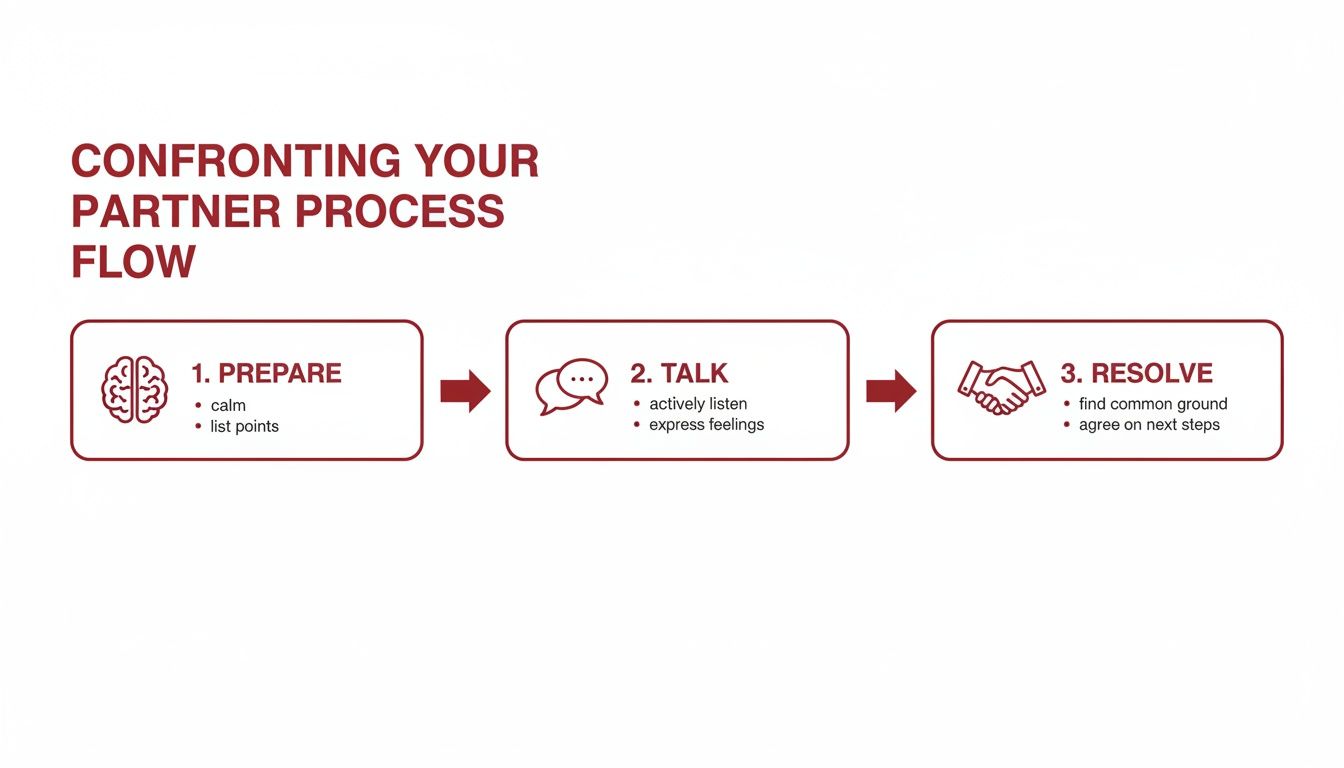
This framework shows how moving from preparation to resolution requires both of you to show up honestly and constructively. It sets the stage for real healing to begin.
Taking Proactive Steps to Heal
Now for the deeper work. Both of you have to be willing to look at what made the relationship vulnerable in the first place. Was communication broken? Were emotional needs going unmet? This is where understanding your love languages can be a game-changer.
If one partner's primary love language is Words of Affirmation, and they were getting that validation from someone else, it shines a light on a huge gap.
Taking the Love Language Test is an incredibly practical first step. It gives you a shared vocabulary to finally talk about what you both need to feel truly loved and secure. This isn't about blaming; it's about gaining the clarity you need to reconnect.
Rebuilding trust is a marathon, not a sprint. It demands patience, consistency, and the courage to be vulnerable again. Each honest conversation and kept promise is a single brick laid in a new foundation.
Today's digital world has made things more complicated. Data shows that electronic emotional infidelity—flirty DMs or secret messaging apps—affects 23% of men and 14% of women. These online betrayals show how easily modern technology can blur boundaries and cause profound hurt.
Roadmap to Rebuilding Trust After an Emotional Affair
Navigating the aftermath requires a clear, intentional plan. The table below outlines a roadmap for both partners, detailing the necessary actions and shared goals at each stage of the healing process.
| Recovery Stage | Actions for the Unfaithful Partner | Actions for the Betrayed Partner | Shared Goal |
|---|---|---|---|
| Stage 1: Crisis & Disclosure | End the affair completely. Offer total transparency (e.g., access to devices). Take full responsibility without excuses. | Express your pain and set initial boundaries. Ask clarifying questions to understand the scope of the betrayal. | Establish safety and honesty as the new foundation. |
| Stage 2: Understanding the "Why" | Explore personal vulnerabilities that led to the affair. Show genuine remorse and empathy for your partner’s pain. | Work through feelings of anger and grief. Identify your unmet needs within the relationship. | Gain insight into the root causes of the affair. |
| Stage 3: Rebuilding Connection | Proactively demonstrate commitment through consistent, trustworthy actions. Re-engage emotionally and physically. | Manage triggers and communicate needs constructively. Gradually risk trusting your partner again. | Create new patterns of intimacy and connection. |
| Stage 4: Forgiveness & Future | Maintain consistency and patience, understanding that trust takes time. Co-create a new vision for the relationship. | Choose to forgive (which is different from forgetting). Focus on building a stronger, more resilient future together. | Solidify a new, more honest, and affair-proof relationship. |
This journey is a joint effort. Both partners play a crucial role in healing the wound and creating a relationship that is stronger and more honest than before.
The Marathon of Rebuilding Trust
Trust isn't rebuilt overnight. It takes consistent, daily effort. The partner who had the affair has to be willing to offer total transparency, answer the hard questions, and show genuine remorse through their actions—not just their words.
For the betrayed partner, the work involves managing painful triggers and making a choice, day by day, to believe that a secure future is possible. For practical strategies, you might find these trust exercises for couples incredibly helpful.
Don't be afraid to seek professional guidance. A good couples therapist can provide a structured, safe space to navigate this difficult process. With the right tools and a shared commitment, recovery isn't just a vague hope—it's an achievable possibility.
How Love Languages Can Affair-Proof Your Relationship
Healing after a betrayal is one thing, but what if you could build a relationship that's so connected it becomes resistant to disconnection? The best defense against an emotional affair isn't playing detective; it's fostering a deep, intentional bond.
This is where understanding and speaking the love languages becomes your relationship’s superpower.
So many emotional affairs start with a simple, unmet need—what you might call a love language mismatch. When one partner is desperate for Words of Affirmation but keeps getting Acts of Service, they can feel invisible and unloved. This creates a quiet ache that an outsider’s simple compliment can start to fill.
Filling Your Partner’s Emotional Tank
When you intentionally speak your partner's primary love language, you fill their emotional tank. This leaves very little room for someone else’s validation to seem appealing. It’s all about becoming the primary source of what makes them feel truly seen, cherished, and secure.
Once their core needs are met at home, the temptation to look for that feeling elsewhere fades. Your bond shifts from being merely functional to deeply nourishing.
Here’s what that looks like in real life:
- For a Quality Time person: One hour of your undivided attention—phones down, eyes on each other—is more potent than a dozen expensive gifts.
- For a Words of Affirmation person: A heartfelt text praising their hard work can neutralize the flattery of a coworker's casual compliment.
- For an Acts of Service person: Quietly taking a chore off their plate without being asked says, “I see you, and I’ve got your back” louder than any words.
True intimacy is built in the daily practice of loving your partner in the way they actually feel it. It's a proactive strategy that doesn’t just repair trust—it affair-proofs your connection for the long haul.
By understanding exactly what the 5 love languages are, you get a powerful roadmap straight to each other's hearts. You stop guessing and start connecting with targeted, meaningful actions that build a bond that's incredibly hard to break.
A Few Common Questions, Answered
When you're trying to make sense of emotional infidelity, a lot of specific questions can pop up. It's normal to wonder where the lines are drawn and what certain behaviors really mean for your relationship. Let's clear up some of the most common ones.
Can It Be Emotional Cheating Without Romantic Intent?
Absolutely. The real betrayal isn't always about romantic desire—it's about the redirection of emotional intimacy and the secrecy that surrounds it. When your partner shares deep vulnerabilities, dreams, and frustrations with someone else that were once reserved for you, the sting is the same.
Intent doesn't cancel out the impact. The damage happens when a new, hidden bond starts pulling emotional energy away from your primary relationship. If it feels like a betrayal, that's because it is. A fundamental trust has been broken.
What Is the Difference Between Emotional Cheating and a Close Friendship?
This is a huge one, and it really comes down to two things: transparency and boundaries. A healthy, platonic friendship enriches your life and supports your primary relationship. It’s a connection your partner knows all about; maybe you even hang out with that friend as a couple.
An emotional affair, on the other hand, lives in the shadows. It siphons emotional energy away from your partnership, creating distance and suspicion. Think of it this way: a friendship adds to your relationship, while an emotional affair subtracts from it.
Can You Emotionally Cheat With an Ex?
Yes, and honestly, this can be one of the most dangerous situations. Keeping a secret, emotionally charged connection with a former partner is a massive threat to the relationship you're in now. That shared history and past intimacy create a powerful pull that can easily stir up old feelings.
This kind of bond is rarely "just a friendship." It often keeps one foot firmly planted in the past, preventing both you and your current partner from fully moving forward together. The secrecy alone makes it a clear and painful breach of trust.
Navigating the complexities of emotional connection can be tough, but you don't have to do it alone. The first step to building a stronger, more affair-proof relationship is understanding what you and your partner truly need to feel loved. Ready to find out? Discover your love language with our free, 3-minute test and start building a deeper, more meaningful bond today.